
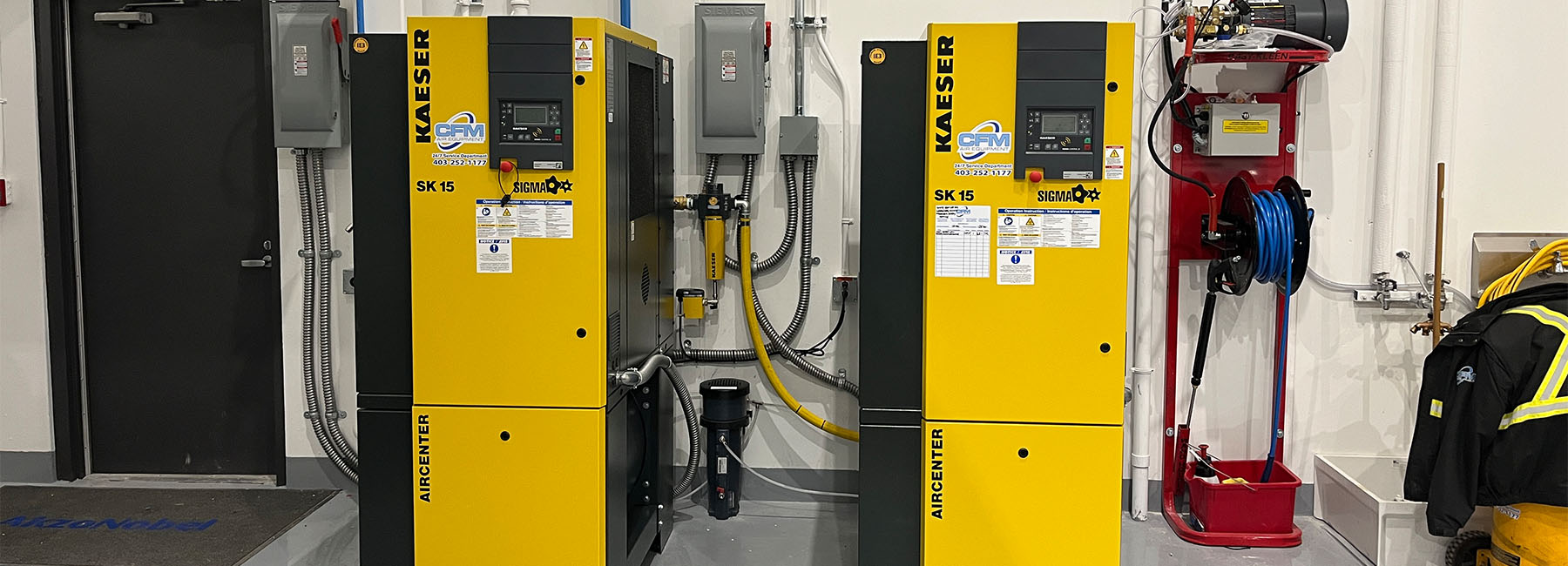
In the world of industrial air compressors, the quality of the compressed air is paramount. Contaminants such as moisture, oil aerosols, and particulates can wreak havoc on downstream equipment, compromise product quality, and even violate regulatory standards. This is where specialized Air Compressor Separation (SEP) Systems come into play. These systems, provided by experts like Air Compressors Canada, are not just an optional add-on; they are an essential component in maintaining a clean, efficient, and reliable compressed air supply.
The pursuit of cleaner air is an ongoing challenge. Traditional filtration methods, while necessary, often reach a limit in their ability to remove the most persistent contaminants, especially in high-demand industrial settings. Industrial Air Compressor SEP Systems represent a significant technological leap, engineered to work in conjunction with standard filtration to drastically improve overall contaminant removal efficiency.
The Contaminant Challenge in Compressed Air
Compressed air systems draw in ambient air, which contains a host of undesirable elements. Once compressed, the concentration of these contaminants increases significantly.
- Water Vapor/Moisture: Compressing air causes water vapor to condense, leading to liquid water that can cause corrosion, wash away lubricants, and foul pneumatic equipment.
- Oil Aerosols and Vapor: While oil-free compressors exist, many industrial units use oil for lubrication. This oil can aerosolize (form fine mists) and carry over into the air stream, damaging sensitive instruments and products.
- Solid Particulates: Dust, rust, pipe scale, and dirt are all drawn in or generated within the system, leading to abrasion and blockages.
The goal of a robust compressed air treatment system is to reduce these contaminants to levels appropriate for the specific application (e.g., breathing air, food and beverage processing, pharmaceuticals).
The Technology Behind Industrial Air Compressor SEP Systems
Industrial Air Compressor SEP Systems improve efficiency by employing separation principles often superior to simple barrier filtration. The fundamental mechanisms focus on removing bulk liquids, fine aerosols, and even oil vapor before they can challenge high-efficiency filters.
1. Bulk Liquid Removal (Pre-Separation)
The first line of defense is often a cyclonic separator or separator/filter combination, which is a critical part of the SEP approach.
- Mechanism: As the compressed air passes through the separator, it is forced into a rapid circular motion. The centrifugal force throws heavier liquid droplets (mostly water and some oil) against the walls of the separator bowl, where they coalesce and drain away.
- Efficiency Boost: By removing up to 99% of bulk liquid water before it reaches a dryer or a primary coalescing filter, the SEP system significantly reduces the load on those components. This prevents filter saturation, lowers the dew point requirements for dryers, and extends the lifespan of downstream equipment.
2. Advanced Coalescence
While standard coalescing filters are common, SEP Systems often integrate highly advanced designs for superior aerosol removal.
- Mechanism: Coalescing filters work by capturing fine oil and water aerosols. As the tiny liquid particles pass through the filter media’s torturous path, they collide and stick together (coalesce) to form larger droplets. Gravity then pulls these larger droplets to the bottom of the filter housing, where they are removed by an automatic drain.
- Efficiency Boost: The proprietary media used in modern SEP filters often features increased surface area, lower pressure drop, and higher efficiency ratings (e.g., down to 0.01 micron). This ensures that even the most persistent sub-micron oil aerosols are captured and removed.
3. Oil Vapor Adsorption (Where applicable)
For applications requiring ultra-high purity, such as medical or breathing air, the system may include an activated carbon stage.
- Mechanism: Activated carbon is used to adsorb oil vapors (gaseous contaminants). Adsorption is a process where gas molecules physically stick to the vast internal surface area of the carbon granules.
- Efficiency Boost: While oil aerosols are handled by coalescing, only adsorption can effectively remove oil in its gaseous state, achieving air purity far exceeding ISO standards for oil content.
Key Improvements in Contaminant Removal Efficiency
The integration of advanced SEP technology offers tangible benefits that directly translate to better performance and lower operating costs.
1. Lower Operating Costs Through Energy Savings
- Reduced Pressure Drop: By effectively removing bulk liquids and larger particles, SEP systems prevent premature clogging and saturation of fine-particle and coalescing filters. Saturated filters require the compressor to work harder, leading to a higher pressure drop across the system. A lower, consistent pressure drop translates directly into less energy consumption and significant electricity cost savings.
2. Extended Equipment Lifespan and Reduced Maintenance
- Protection of Downstream Equipment: Clean, dry, and oil-free air is less corrosive and abrasive. Pneumatic tools, valves, cylinders, and instrumentation last significantly longer when exposed to air treated by an efficient SEP system. This reduces capital expenditure and unscheduled downtime.
- Longer Filter Life: Less liquid and particulate load on final stage filters means they do not need to be replaced as frequently, saving on consumables.
3. Guaranteed Air Purity
- Meeting Strict Standards: Industries like food and beverage, pharmaceuticals, and electronics manufacturing have stringent air purity standards (often governed by ISO 8573-1). The multi-stage, high-efficiency approach of Industrial Air Compressor SEP Systems ensures that the required purity class is consistently achieved and maintained, protecting the final product.
Choosing the Right SEP System
Selecting the correct SEP system requires an understanding of the compressor’s capacity, the ambient air conditions, and the final required air quality. Air Compressors Canada provides expert consultation to size and specify systems that match the application precisely, ensuring optimal efficiency without over- or under-sizing the equipment.
For those looking to integrate high-efficiency contaminant removal into their air compression setup, exploring the options available is a critical step.
To learn more about how a dedicated SEP solution can transform your air quality and protect your investments, check out the specialized SEP products
FAQ
What is an Industrial Air Compressor SEP System?
An Industrial Air Compressor SEP System (Separation System) is an engineered solution designed to maximize the removal of liquid contaminants—primarily water and oil aerosols—from compressed air. It typically involves specialized pre-filtration, cyclonic separators, and advanced coalescing filters to reduce the contaminant load on the main system and achieve a higher air purity class.
How is an SEP System different from a standard filter?
A standard filter is a barrier that captures solid particulates and, in the case of a coalescing filter, aerosols. An SEP System is a system that combines multiple separation principles, often starting with cyclonic action to remove bulk liquid before the air even reaches the fine filters. This pre-separation significantly extends the life and efficiency of the downstream coalescing and particulate filters.
Will an SEP System remove oil vapor?
No, a standard SEP System primarily removes liquid oil (aerosols and droplets). To remove oil vapor (oil in a gaseous state), a specific filtration stage using activated carbon must be added to the system. This stage is usually necessary for the highest purity applications, such as breathing air or certain pharmaceutical processes.
What are the main benefits of installing an Industrial Air Compressor SEP System?
The main benefits include energy savings (due to reduced pressure drop and load on the compressor), extended lifespan of expensive downstream equipment (like dryers and pneumatic tools), reduced maintenance costs (due to longer filter life), and the ability to consistently meet stringent ISO air purity standards.
Where should an SEP System be installed in the compressed air line?
SEP systems, particularly the bulk separation components (cyclonic separators), are often installed immediately after the compressor and before the dryer and main line filters. This placement ensures that the air is pre-treated and the maximum amount of liquid is removed before reaching the moisture-sensitive dryer and the critical fine filters.

