
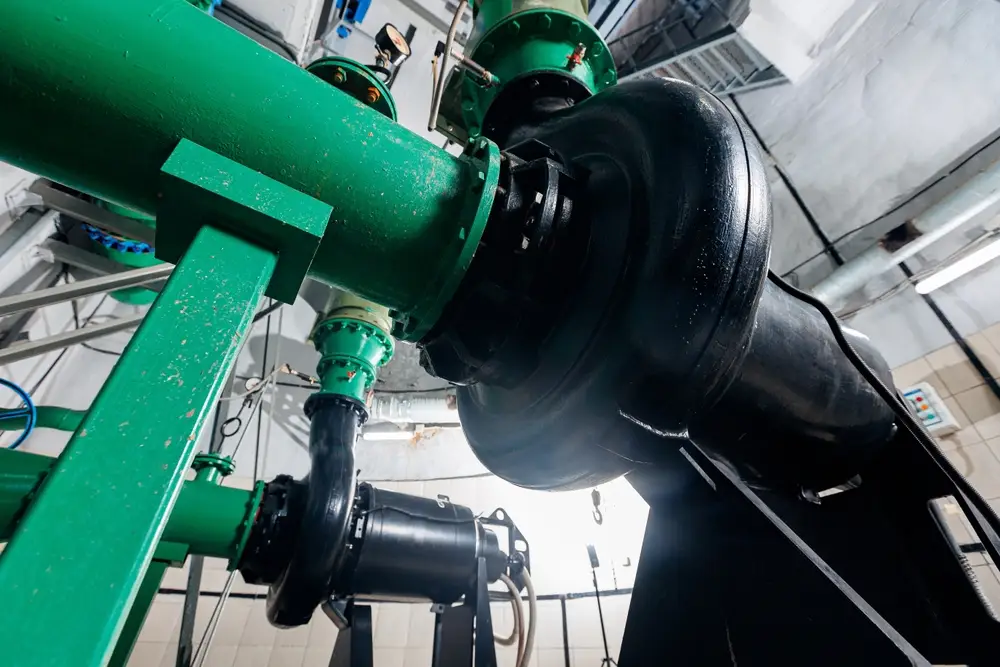
Compressed air gets most of the attention on a plant floor, but a surprising amount of production actually depends on the opposite: pulling a steady, reliable vacuum. Whenever an application needs a clean environment or a pressure below atmospheric, a dependable vacuum supply becomes as critical as any compressor. From food packaging and glass or can production to plastic extrusion, woodworking, pharmaceuticals conveying, and automotive parts handling, vacuum is quietly doing essential work across dozens of industries. CFM Air Equipment supplies and services the systems that make it happen.
The tricky part is that vacuum is not one technology. Choosing the wrong pump for the process can mean contamination, wasted energy, or constant maintenance. Getting it right starts with understanding the two workhorses of industrial vacuum: dry pumps and liquid ring pumps.
Two Families of Vacuum Pump
Dry vacuum pumps
The defining feature of a dry vacuum pump is that there is no lubrication in the main pumping chamber. That single design choice eliminates the risk of oil contaminating the process, which is exactly why dry pumps dominate in clean applications like food, electronics, and pharmaceuticals. They also tend to be efficient and clean to run. CFM Air Equipment offers several dry pump options, which gives a plant the flexibility to match capacity and vacuum level to the specific job rather than forcing one design onto every application.
Liquid ring vacuum pumps
Liquid ring pumps take a different approach, using water or another process-compatible liquid as the sealant. With no contacting parts inside, they are simple, robust, and forgiving. That makes them a safe and reliable choice for handling dirty or wet gas streams that would trouble a dry pump. Available in single and two-stage configurations, they are the pragmatic answer where the process is messy and uptime matters more than a spotless chamber.
How to Choose Between Them
The decision usually comes down to three questions.
What is in the gas stream? If the process carries moisture, particulate, or condensable vapours, a liquid ring pump often handles it gracefully. If the process must stay pristine, a dry pump protects it.
What vacuum level do you need? Different applications demand different depths of vacuum. Over-specifying wastes energy; under-specifying stalls the process. Matching the pump curve to the real operating point is the whole game.
How does it fit the rest of your system? Vacuum rarely lives alone. It shares a facility with compressed air, filtration, and controls. A partner who understands the full system, not just one pump, can integrate the vacuum side so it complements your compressed air equipment rather than competing with it for space and attention.
Why the Application Review Matters
Because CFM Air Equipment works across so many industries, from mining and agriculture to building maintenance and power generation, the team has seen how the same nominal vacuum requirement plays out very differently in a food plant versus a woodworking shop. That experience is what turns a spec sheet into a system that actually holds up.
A proper review looks at the process, the duty cycle, the ambient conditions of a prairie facility, and how the vacuum system will be maintained. It also weighs total cost of ownership: a pump that never contaminates the process and rarely needs attention can be worth far more than its initial simplicity suggests. CFM Air Equipment provides that assessment before recommending hardware, so the solution fits the plant.
Built for Western Canadian Facilities
Prairie plants deal with temperature swings, dust, and long production runs. A vacuum system that thrives in those conditions is one that has been specified for them, installed correctly, and backed by service. CFM Air Equipment supports installations across Central and Western Canada with a 24/7 service department, so a vacuum failure does not become an open-ended production stoppage.
Frequently Asked Questions
What is the main advantage of a dry vacuum pump?
There is no lubrication in the main pumping chamber, which eliminates the risk of oil contaminating the process. That makes dry pumps ideal for clean applications such as food, electronics, and pharmaceuticals.
When is a liquid ring pump the better choice?
Liquid ring pumps handle dirty or wet gas streams well because they use a liquid seal and have no contacting parts inside. They are a reliable, low-fuss option when the process is messy.
Which industries actually use industrial vacuum?
A wide range, including food packaging, glass and can production, paper printing, plastic extrusion, woodworking, pharmaceuticals conveying, automotive parts handling, and more.
Can CFM Air Equipment help me size a vacuum system?
Yes. The team reviews your process, required vacuum level, gas stream, and operating conditions, then recommends and quotes a system after the assessment.
Does the same company handle service after installation?
Yes. CFM Air Equipment backs its vacuum installations with a 24/7 service department covering Central and Western Canada.
Whether you need a spotless dry pump for a food line or a rugged liquid ring pump for a demanding process, the right choice starts with a conversation. Contact CFM Air Equipment through its industrial vacuum systems page or reach the Calgary team directly to review your application.

