
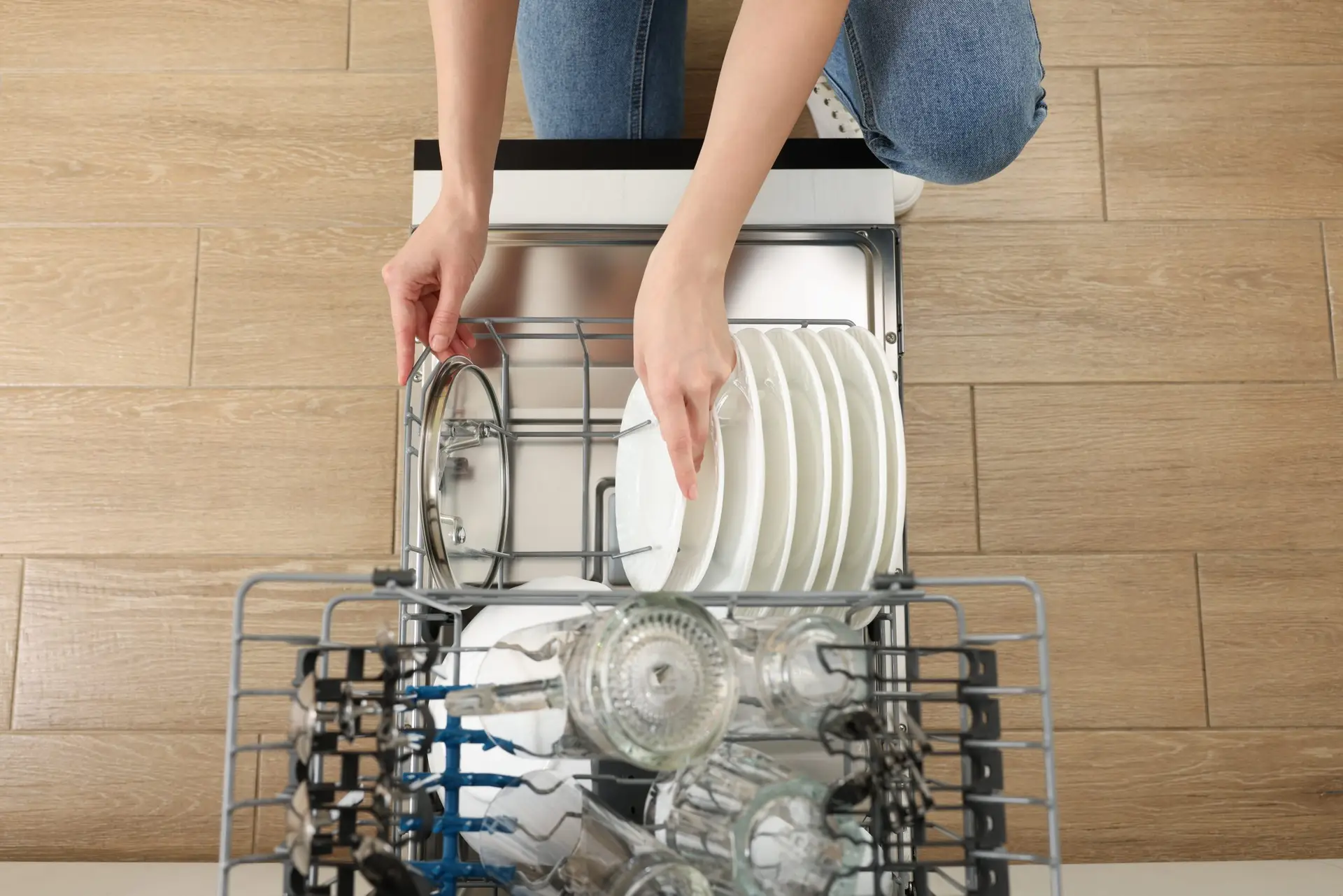
The dishwasher runs its full cycle, the timer beeps, you open the door, and everything inside is still damp. Glasses drip, plastic containers hold pools of water, and the cutlery looks spotted. A dishwasher that cleans but won’t dry is a common complaint, and the reasons are more mechanical and more fixable than most people expect. At JAY Appliance Repair Leduc, we help homeowners sort out drying problems regularly, and the causes usually fall into a handful of categories.
First, Understand How Your Dishwasher Dries
Not all dishwashers dry the same way, and knowing your method changes the diagnosis.
- Some models use a heated dry cycle, warming the air with an element to evaporate moisture.
- Others rely on condensation drying, where hot final-rinse water helps moisture evaporate and run down the stainless tub walls.
If your machine uses condensation drying, wet dishes at the end can be partly normal, and small habits make a big difference. If it uses heated dry and suddenly stops drying, a component may have failed.
The Rinse Aid Factor
Why It Matters More Than People Think
Rinse aid is not just for shine. It breaks the surface tension of water so droplets sheet off dishes instead of clinging in beads. Without it, water pools and dries into spots, especially on glasses and plastic. An empty rinse aid dispenser is one of the most common reasons for poor drying, and topping it up is the easiest first step.
Check the Dispenser
If you add rinse aid but drying does not improve, the dispenser cap or seal may be faulty, meaning the rinse aid never reaches the wash. That is a simple thing for a technician to confirm.
Loading Habits That Sabotage Drying
How you load the racks affects drying more than most people realize. Cups and containers with concave bottoms trap water. Overcrowded racks block airflow and let dishes drip onto each other. Nesting items shield surfaces from the drying process entirely. Angling items so water runs off, and leaving space between them, often improves results without any repair at all.
When It’s a Real Fault
A Failed Heating Element
On models with heated dry, a burned-out heating element leaves dishes wet every time even though the wash cycle seems normal. Since the same element sometimes assists the wash, a failure can affect performance in more than one way. This is a targeted, replaceable part.
A Faulty Vent or Fan
Many dishwashers use a vent, and some a small fan, to push moist air out at the end of the cycle. If the vent stays shut or the fan fails, humid air stays trapped inside and settles back onto the dishes as condensation.
A High-Limit Thermostat Cutting Heat Early
A thermostat that trips too soon can cut the drying heat before the job is done, leaving a load that is clean but damp.
When to Call a Professional
If rinse aid is full, the dishes are loaded well, and the machine still leaves everything wet, an internal component is the likely cause. Rather than guessing between the element, vent, fan, and thermostat, a technician tests each in turn. Our dishwasher repair in Leduc service pinpoints the exact drying fault so the correct part is replaced the first time.
Drying trouble sometimes travels with other symptoms like standing water or poor cleaning, and Jay Appliances covers those too as part of full appliance repair in Leduc for all major brands.
Simple Habits That Improve Drying
Before assuming the worst, a few everyday habits noticeably improve results and are worth building into your routine:
- Keep the rinse aid dispenser topped up at all times.
- Load cups and containers at an angle so water runs off instead of pooling.
- Leave space between items so warm air can circulate freely.
- Crack the door open for a few minutes after the cycle to let steam escape.
- Run the kitchen hot-water tap briefly before starting, so the wash begins with genuinely hot water.
These small changes resolve a surprising share of drying complaints on their own, and they are all worth trying before booking service.
Frequently Asked Questions
Why are my dishes still wet after a full cycle?
The most common reasons are an empty rinse aid dispenser, loading habits that trap water, or a failed heating element or vent on models that use them. Sorting out which one is the cause is the key to fixing it.
Does rinse aid really improve drying?
Yes. Rinse aid helps water sheet off dishes instead of forming droplets that dry into spots. An empty dispenser is one of the most frequent causes of poor drying and spotting.
Is condensation drying supposed to leave some moisture?
Some residual dampness can be normal with condensation drying, especially on plastics. Good loading, rinse aid, and opening the door after the cycle all help. A sudden change from dry to wet, though, suggests a fault.
Can a broken heating element be replaced?
Yes. On dishwashers that use heated dry, the heating element is a targeted, replaceable part. JAY Appliance Repair Leduc can confirm whether the element is the cause and replace it.
Do you serve communities near Leduc?
Yes. Jay Appliances serves Leduc, Nisku, Beaumont, Edmonton, Fort Saskatchewan, and surrounding areas, with flexible scheduling and same-day service when available.

