
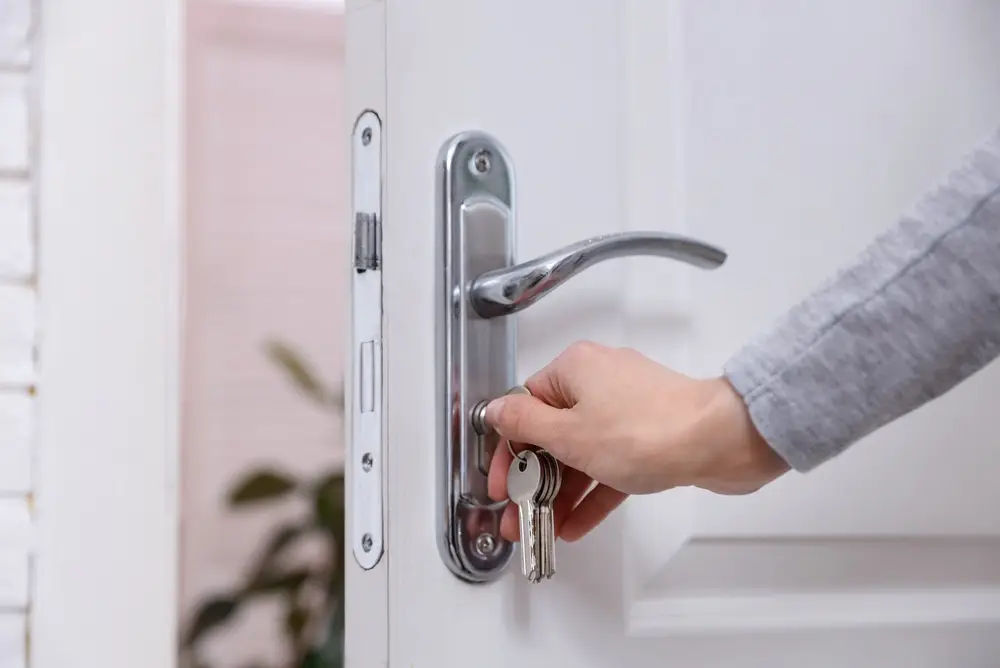
Every landlord in Ottawa eventually discovers the same blind spot. You hand a tenant a key, and from that moment you have no real control over how many copies exist. A key stamped "Do Not Duplicate" is a polite request, not a lock, and most hardware kiosks will copy it anyway. For a property owner responsible for tenant safety, that uncertainty is a liability waiting to happen. Restricted keyways close the loophole, and Key Fox Locksmith helps landlords across the city put real key control in place.
Why "Do Not Duplicate" fails
The phrase feels official, but it carries no legal or mechanical weight. The blank is a standard blank, the cutting machine is a standard machine, and a copy takes under a minute. A departing tenant, a former partner, a contractor, or an old roommate can walk away with a working key you never authorized. When the next tenant moves in, you are trusting that none of those copies still exist. That is not a security plan; it is a hope.
For a single unit, the practical answer between tenants is rekeying, which changes the pins so old keys stop working. Our rekeying service is the fastest way to reset access when someone moves out. But rekeying resets the lock; it does not stop the next tenant from copying their new key. For that, you need a different class of system.
How a restricted keyway actually works
A restricted keyway uses patented key blanks that are not sold on the open market. Only an authorized locksmith holds the blanks and the authority to cut them, and copies are released only to people on your signed authorization list. That means every key in circulation is one you approved. When a tenant leaves, you know exactly how many keys existed and can reconcile them.
This is a meaningful upgrade for landlords managing multiple units, because it turns keys from an untracked commodity into a controlled asset. Combined with a proper key log, you finally have an answer to the question every property owner should be able to answer: who can get into my building right now?
Master keying without losing control
Restricted systems and master keying work well together. A well-designed hierarchy lets a property manager carry one master key that opens common areas and, where appropriate, individual units, while each tenant’s key opens only their own door. We explain the mechanics of this in our guide to master key systems for security, and the same logic scales neatly to multi-unit residential buildings.
The advantage for a landlord is enormous. Instead of a ring of thirty keys, you carry one. Instead of hoping no one copied a unit key, every blank runs through you. Key Fox Locksmith designs these hierarchies so access maps to responsibility, not to whoever happened to keep a spare.
High turnover changes the math
Rooming houses, student rentals near the universities, and short-lease units all cycle tenants far faster than a typical home. Every turnover is another chance for a stray key to slip out of your control. We have written about why high-traffic properties need rekeying more often than owners expect, and the principle applies directly to busy rental portfolios. A restricted system reduces the frequency of full rekeys because unauthorized copies simply cannot be made in the first place.
Planning a system that grows with your portfolio
The best time to set up key control is before you need it. Retrofitting a restricted system across an occupied building takes coordination, but it is far cheaper than the cost and reputational damage of a break-in traced to an uncontrolled key. Key Fox Locksmith can phase the transition, unit by unit, so tenants are never left without access.
Landlords who also manage commercial or mixed-use space can bring those doors under the same umbrella. Our commercial locksmith team in Ottawa handles storefronts, offices, and shared entries, so a single key strategy can cover your whole holding rather than a patchwork of unrelated locks.
Frequently Asked Questions
Are restricted keys legal for landlords to require?
Yes. As the property owner you control the locks on common areas and units between tenancies. What restricted keys change is not your rights but your ability to enforce them, by ensuring no unauthorized copies exist.
What happens if a tenant loses a restricted key?
You contact Key Fox Locksmith, we verify you are on the authorization list, and we cut an approved replacement. Because we hold the blanks, the lost key cannot be duplicated by anyone who finds it, which is a security advantage rather than an inconvenience.
Do I still need to rekey between tenants with a restricted system?
You rekey far less often. If you have accounted for every authorized key and none is missing, you may not need a full rekey at all. When a key is unaccounted for, a quick rekey restores control.
Can a restricted system cover multiple buildings?
Absolutely. A master hierarchy can span several properties while keeping each tenant’s access limited to their own door. This is exactly the kind of planning Key Fox Locksmith builds for portfolio owners.
Is this only for large landlords?
No. Even an owner of one or two units benefits from knowing exactly how many keys exist. The peace of mind scales down as well as up.
To design key control that fits your Ottawa rental properties, call Key Fox Locksmith at (343) 800-5446. We serve landlords across Ottawa, Gloucester, Orleans, Kanata, and the surrounding areas.

