
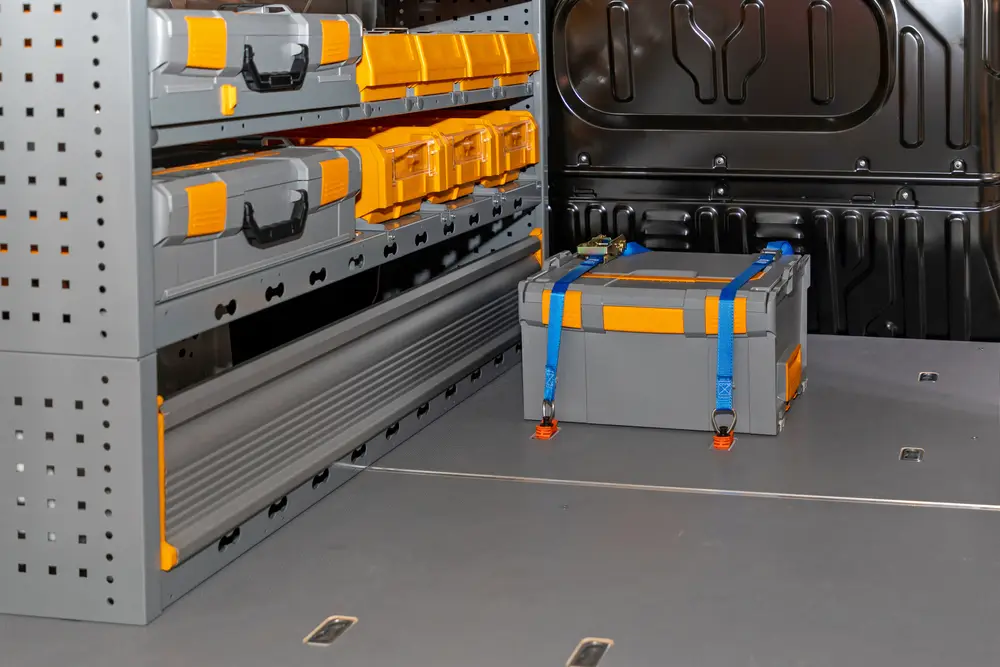
A mobile detailing operation is a workshop on wheels in the most literal sense. The van carries water, chemicals, a vacuum, pressure equipment, pads, towels, and a dozen bottles that all want to tip, leak, or roll. Unlike a trade van that visits a job site and leaves, a detailing van is the job site, parked in a driveway with its doors open for hours at a time.
That changes the design priorities. Organization, chemical containment, and airflow matter more here than raw payload, and a van built around them lets a detailer run more appointments in a day with less mess and less restocking. Here is how to set one up.
Design Around the Workflow, Not the Vehicle
A detailing day is a loop: pull products, work the vehicle, reload, drive, repeat. If the van forces the detailer to climb over a vacuum to reach a bottle of interior cleaner, every appointment loses minutes and gains frustration.
Canadian Van Outfitters has a clear writeup on how shelving layout affects your workflow, and the principle lands hard for detailing: the products and tools used first and most should sit nearest the working door at a comfortable height, with bulk stock and rarely used gear pushed to the edges.
Zone the Van by Task
Give exteriors, interiors, and finishing their own zones on the shelving. A detailer thinks in stages, and a van that mirrors those stages keeps the right bottle in the right reach at the right moment.
Keeping Bottles, Pads, and Towels From Becoming Chaos
Detailing generates clutter faster than almost any mobile trade. Spray bottles, pad holders, towel bins, and applicator trays all need a fixed home or they end up in a heap on the floor by the third car.
The right small van accessories solve this: bottle holders that keep sprays upright and reachable, hooks for cords and hoses, and holders that keep the daily-use items off the floor. Small as they are, these pieces cut the wasted motion that quietly eats a detailer’s schedule. Canadian Van Outfitters builds accessories that mount to shelving and partitions so every item has a dedicated place.
Containing Water and Chemicals
Liquids are the detailing van’s defining hazard. A tipped gallon of degreaser or a leaking spray bottle can ruin towels, corrode tools, and leave a slick that follows the detailer into the next appointment. Store chemicals low and upright in holders with a lip, keep them separated from clean towels and pads, and strap anything heavy so it cannot shift on the drive between jobs.
Keep absorbent cloths and spill kit within reach too. In a van full of liquids, the fastest cleanup is the one that happens before the spill spreads.
Airflow for Fumes and Damp Gear
A detailing van lives with two moisture problems: the fumes from solvents and dressings, and the damp that comes off wet towels and pads loaded back into a closed bay. Both build up fast in a sealed cargo area, and both are worse in cold weather when the doors stay shut between stops.
Proper van ventilation moves that trapped air out, clearing fumes and helping damp gear dry instead of souring in a closed van overnight. Better airflow also cuts the condensation that corrodes metal tools and shortens the life of electronics riding in the back.
A Van Built for Canadian Seasons
Detailing does not stop when the weather turns, and a van that works in July has to survive January. Canadian Van Outfitters designs, manufactures, and ships commercial vehicle equipment across Canada, so the shelving, accessories, and ventilation are built for the cold, damp, and salt a mobile detailer faces through a full year of appointments.
Frequently Asked Questions
How do I keep spray bottles from tipping over in transit?
Use dedicated bottle holders mounted to the shelving or partition rather than leaving bottles loose on a shelf. Holders keep sprays upright and reachable, which prevents both spills and the scramble to find the right bottle.
Does a detailing van need ventilation?
Yes. Solvent fumes and damp towels both build up in a closed cargo bay, and a ventilation system clears that air, protecting the detailer’s comfort and extending the life of tools and electronics stored in back.
What is the best shelving layout for mobile detailing?
Zone the van by task, exteriors, interiors, and finishing, and keep the most-used products nearest the working door at a comfortable height. Matching the layout to your workflow is the single biggest time-saver.
How should I store detailing chemicals safely?
Keep them low, upright, and in holders with a lip, separated from clean towels and strapped so nothing shifts on the drive. Keep a spill kit within reach for the occasional leak.
Which vans can be outfitted for detailing?
Canadian Van Outfitters builds shelving, accessories, and ventilation for common models including Ford Transit, Mercedes Metris, and Chevy Express. Match the products to your exact van, and ask about local installation in the Concord, Ontario area.
A mobile detailing van earns its keep by running clean, dry, and organized from the first appointment to the last. Build it around the workflow, contain the liquids, and keep the air moving, and the van becomes a reliable second set of hands instead of a daily mess to manage.

