
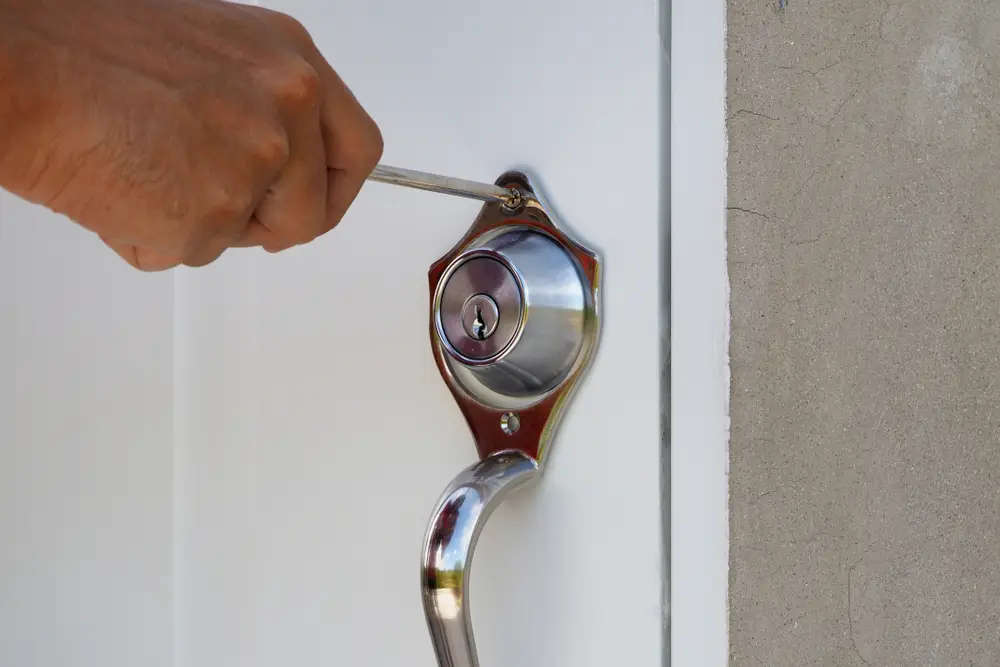
When people picture a break-in, they imagine a smashed window or a kicked-in door. In reality, many intrusions are quieter than that. Common locks can be defeated with techniques that leave little obvious damage, which is exactly why they work. Your Key Maker installs hardware built to resist these methods, and understanding how they work makes it clear why the lock from a big-box bin is not always enough.
The Quiet Ways Doors Get Opened
The locks that come standard on many doors were designed for convenience and a basic level of deterrence, not to stand up to a determined attempt. A few well-known techniques exploit their weaknesses.
Lock bumping
Lock bumping uses a specially cut key, sometimes called a bump key, tapped sharply while light turning pressure is applied. The impact bounces the pins inside a standard pin-tumbler lock for a split second, long enough to turn the cylinder. It is fast, quiet, and leaves almost no trace, which makes it hard to spot after the fact. Bump keys are not exotic, and that is the uncomfortable part.
Lock snapping
Some cylinders can be gripped and snapped along a weak point, exposing the internal mechanism so it can be turned directly. Cylinders without anti-snap protection are vulnerable because the attack targets the body of the lock rather than the keyway.
Drilling and picking
Drilling destroys the pins so the cylinder turns freely, while picking manipulates each pin individually with slim tools. Both take more time and skill than bumping, but a standard lock offers little to slow either one down. The common thread is that ordinary hardware was never built to resist a focused effort.
Why Big-Box Locks Fall Short
A basic lock has soft internal components, loosely toleranced pins, and no hardened plates to stop a drill bit. It is designed to keep an honest person honest and to look reassuring on the shelf. Against bumping, snapping, or drilling, it buys very little time, and time is the one thing that matters most in a break-in. The longer a door resists, the more likely an intruder gives up and moves on.
What High-Security Hardware Does Differently
High-security locks are engineered specifically against these attacks. They use features such as hardened steel inserts and anti-drill plates to defeat drill bits, anti-bump and anti-pick pin designs that do not respond to a bump key, and reinforced cylinders that resist snapping. Many also use restricted keyways, so keys cannot be copied at an ordinary kiosk without authorization.
The client’s own high-security lock installation in Ottawa focuses on resisting picking, drilling, and bumping, using hardware rated to recognized standards rather than the generic locks found at hardware stores. For many homeowners, upgrading the main entrances with upgraded deadbolt hardware is the single most effective security improvement they can make, because it directly closes the gaps these techniques exploit.
Repair, Rekey, or Replace?
Not every door needs a full upgrade. The right response depends on the current hardware and its condition.
- If a lock is physically failing, sticking, or loose, it may simply need lock repair to work safely again.
- If the hardware is sound but you have lost track of who holds keys, rekeying changes the pins so old keys stop working, without replacing the lock body.
- If the locks are basic and you want genuine resistance to bumping, snapping, and drilling, replacing them with high-security hardware is the step that actually raises the bar.
A technician can assess which doors are weak points and recommend the least disruptive path that still fixes the real problem after an on-site look.
Frequently Asked Questions
Is lock bumping really something I should worry about?
It is worth taking seriously because it is fast, quiet, and leaves little evidence. Standard pin-tumbler locks are the most vulnerable. Anti-bump hardware is designed specifically to defeat the technique.
Do I need to upgrade every lock in the house?
Usually not. The highest-value upgrades are the main entry doors and any out-of-sight side or back doors. A locksmith can prioritize the doors that represent the real weak points.
What makes a high-security lock different from a hardware-store lock?
High-security locks add hardened anti-drill plates, anti-bump and anti-pick pin designs, snap-resistant cylinders, and often restricted keyways that prevent unauthorized copying. Ordinary locks have none of these.
Will a high-security lock stop every break-in?
No lock is absolute, but the goal is resistance and time. The longer a door holds out against bumping, drilling, or snapping, the more likely an intruder abandons the attempt, which is exactly what high-security hardware is built to do.
Can I keep my current keys when upgrading?
That depends on the system. Some upgrades come with new restricted keys for better control over copying. During an assessment, Your Key Maker can explain the key options that come with each hardware choice.

