
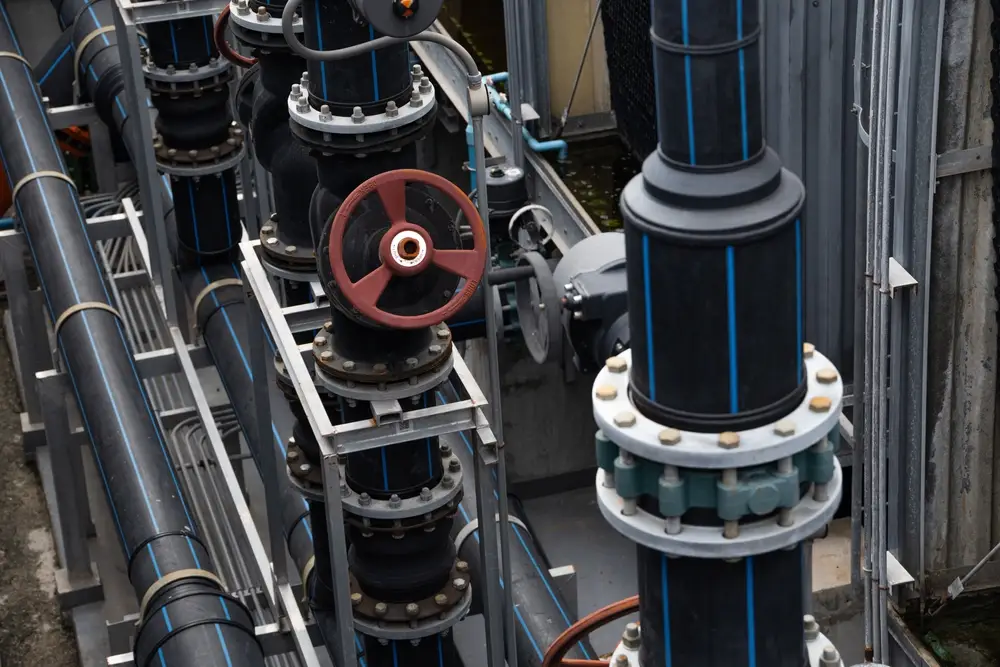
A plant can own a perfectly sized, efficient compressor and still fight low pressure at the far end of the building. The culprit is usually the piping between the compressor and the tool. Pressure drop quietly steals performance, forces the compressor to work harder, and inflates the energy bill. CFM Air Equipment Canada sees this across Alberta, Saskatchewan, and Manitoba facilities, and the good news is that distribution problems are among the most fixable issues in any compressed air system.
What Pressure Drop Actually Costs
Every elbow, undersized pipe run, clogged filter, and leaking fitting adds resistance. The compressor compensates by building higher pressure, and as a rule each increment of added pressure demand raises energy use measurably. Beyond energy, low delivered pressure means tools run slower, cycle times stretch, and operators crank regulators up to force performance that the piping is throttling away.
Measure Before You Redesign
Start by comparing pressure at the compressor discharge with pressure at the point of use during peak demand. A large gap points to the distribution system. Map where the drop occurs, long straight runs, a bank of fittings, an aging filter, before changing anything, so you solve the real bottleneck instead of guessing.
Sizing the Pipe Correctly
Pipe diameter is the biggest lever. Air moving through an undersized pipe accelerates, and friction losses rise sharply with velocity. Generous diameter on the main header keeps air velocity low and pressure stable, even as demand swings. The incremental effort of installing a larger main is almost always repaid by steadier pressure and lower running cost over the system’s life.
Loop Layouts Beat Dead Ends
A loop, or ring main, feeds each drop from two directions, halving the effective distance air travels and smoothing pressure across the plant. Long dead-end branches, by contrast, concentrate drop at the worst possible place, the tool farthest from the compressor. Where layout allows, a loop is the stronger design.
Fittings, Materials, and Smooth Bends
Sharp elbows and rough interior walls create turbulence and loss. Sweeping bends, smooth-bore modern piping, and full-bore valves all reduce resistance. Quality distribution components are engineered for exactly this, and the right accessories make a measurable difference. The air distribution and piping components carried for prairie shops are built around low-loss connections and durable, corrosion-resistant materials that hold their bore over time.
Slope and Drainage
On the prairies, moisture in the line is a constant battle. Pipe runs should slope toward drip legs and drains so condensate collects where it can be removed, not carried to tools. Keeping the right hoses, fittings, and parts on hand means a worn drain or coupling gets replaced before it becomes a leak path and a source of pressure loss.
Taming Leaks and Artificial Demand
Leaks are pressure drop you pay for around the clock. A compressed air system left unmanaged commonly loses a meaningful share of its output to leaks alone. Tag and repair them systematically. Equally important is artificial demand: when system pressure runs higher than needed, every leak and every open-blow application consumes more air. Dialing distribution pressure down to the true requirement shrinks both the leak loss and the energy bill at once.
Filtration and Its Place in the System
Filters protect tools but also introduce drop as their media loads. Size filters for your flow, monitor their differential pressure, and change them on condition rather than guesswork. A filter left in service too long becomes a hidden restriction. Planning filtration into the piping layout, rather than bolting it on later, keeps the whole path efficient.
Bringing It Together on a Real Site
A well-designed distribution system on a prairie plant typically combines a generously sized looped header, smooth low-loss fittings, deliberate slope to drains, right-sized filtration, and an active leak program. None of these is exotic, but together they can recover pressure that a facility had written off as a compressor limitation. When a plant near the Regina facility struggles with far-end pressure, the fix is far more often in the pipe than in the pump.
Frequently Asked Questions
How much pressure drop is acceptable?
Aim to keep the loss between the compressor and the point of use small. A large gap during peak demand signals undersized pipe, restrictive fittings, or loaded filters worth addressing.
Will bigger pipe really lower my energy bill?
Often, yes. Larger-diameter headers reduce velocity and friction, so the compressor does not have to build extra pressure to compensate, and that extra pressure is where much of the wasted energy goes.
Is a looped piping layout worth the extra material?
For most plants with multiple drops, a loop delivers noticeably steadier pressure because each point is fed from two directions. The added piping usually pays off in performance and energy.
How do leaks relate to pressure drop?
Leaks are a continuous demand that forces the compressor to run more and can pull system pressure down. Fixing them and lowering pressure to the true requirement reduces both loss and cost.
Can CFM Air Equipment Canada assess my existing piping?
Yes. The team can measure pressure across your system, identify where drop is occurring, and recommend piping, fittings, and filtration changes, with a quote provided after the assessment.

