
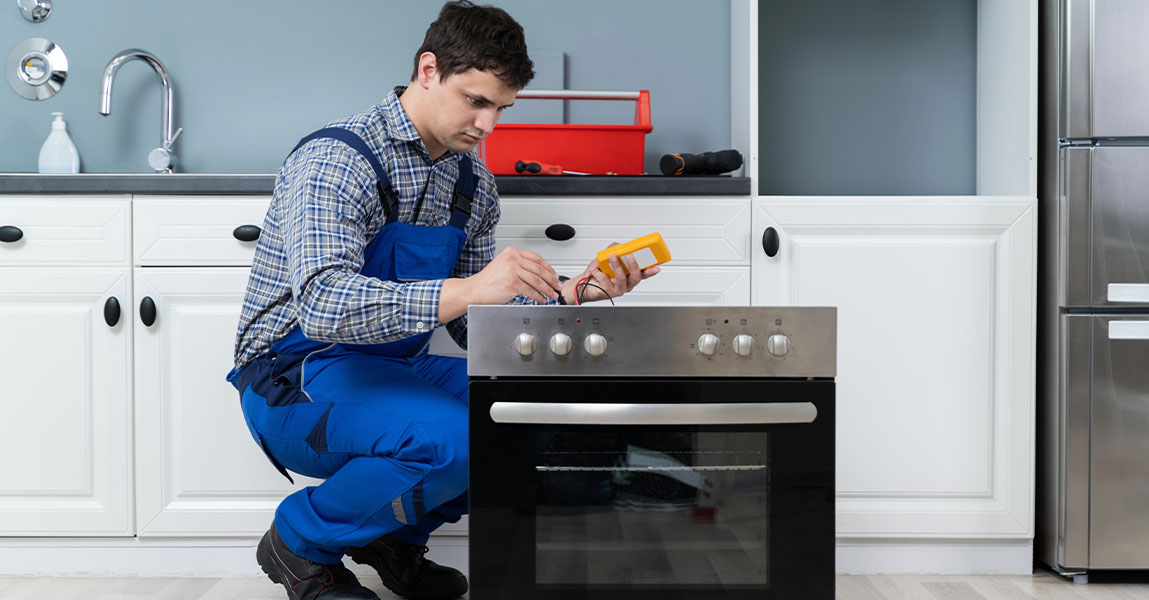
When a stove or oven stops working the way it should, the fix often depends on whether it runs on gas or electricity. The two designs heat food using completely different systems, so the parts that fail, the warning signs, and the safety concerns all differ. Understanding those differences helps Edmonton homeowners respond correctly and know when a problem is a job for a professional. At JAY Appliance Repair, we repair both gas and electric ranges, and the right approach always starts with knowing which type you own.
How Gas and Electric Ranges Heat Differently
An electric range uses heating elements, either exposed coils, a smooth glass-ceramic surface, or bake and broil elements in the oven cavity, that glow when current passes through them. Control boards, sensors, and switches manage the temperature.
A gas range burns natural gas through burners and an oven igniter. Instead of elements, it relies on gas valves, igniters, and safety devices that must all work in sequence. Because open flame and combustion are involved, gas repairs carry safety considerations that electric units do not.
Common Electric Stove and Oven Problems
Burners That Will Not Heat Evenly
On electric cooktops, a burner that stays cold or only works on high often traces back to a failed element or a worn infinite switch. In the oven, uneven baking is a frequent complaint. Our guide on an oven that heats unevenly, top and bottom explains how a failing element or sensor can throw off your results.
Control Board and Sensor Faults
Electric ovens depend on a temperature sensor and control board to hold the set temperature. When either drifts, you get overbaking, underbaking, or an oven that never reaches the dialed setting. These faults call for accurate diagnostics rather than guesswork.
Preheat and Element Wear
Bake and broil elements wear out with use. A cracked or burned-out element is a common reason an electric oven fails to preheat or cook properly.
Common Gas Stove and Oven Problems
Ignition and Burner Trouble
Gas burners that click but will not light, or light slowly, usually point to a dirty or worn igniter, a clogged burner port, or a spark module issue. Weak flames can signal a gas flow or valve problem.
The Smell of Gas
A faint gas odour during ignition can be normal for a second, but a lingering smell is a serious safety concern. Our page on a stove that smells like gas after ignition explains why this should never be ignored. If you smell strong or persistent gas, stop using the appliance and get professional help right away.
Oven Igniter Failure
In a gas oven, a weak igniter may glow but never get hot enough to open the gas valve, leaving the oven cold. This is one of the most common gas oven repairs.
Safety: Where the Two Really Differ
Electric ranges carry the risk of shock from high-voltage elements and wiring, which is why element and control-board work belongs with a trained technician. Gas ranges add the hazards of gas leaks and combustion, so any repair touching the gas supply, valves, or igniters demands professional handling. In both cases, do-it-yourself attempts on the heating or fuel systems can be dangerous and are best avoided.
Getting the Right Repair in Edmonton
Whether your range is gas or electric, an accurate diagnosis prevents wasted parts and repeat breakdowns. Our licensed technicians provide stove repair in Edmonton and dedicated oven repair for both fuel types, including cooktop surface burners. JAY Appliance Repair serves Edmonton along with St Albert, Sherwood Park, Spruce Grove, Leduc, and the surrounding area, with same day service available for many stove and oven issues.
Frequently Asked Questions
Is gas or electric stove repair more expensive?
It depends entirely on the specific fault. Electric repairs often involve elements, sensors, or control boards, while gas repairs commonly involve igniters and valves. A proper diagnosis is the only reliable way to know what a given repair involves.
My gas burner clicks but will not light. What is wrong?
Usually a dirty or worn igniter, a clogged burner port, or a spark module issue. Cleaning the burner may help minor cases, but repeated failure to light should be checked by a technician.
Why does my electric oven cook unevenly?
Common causes include a worn bake or broil element and a temperature sensor or control board that is out of calibration. Each produces uneven results, so a technician confirms which part is at fault.
Is it safe to keep using my stove if I smell gas?
No. A persistent gas smell is a safety issue. Stop using the appliance and arrange professional service. Do not ignore a lingering odour even if the stove seems to work.
Can I replace a heating element or igniter myself?
Because both involve high-voltage electricity or live gas, these repairs are best left to a licensed technician. Incorrect work can create shock, fire, or gas hazards.

