
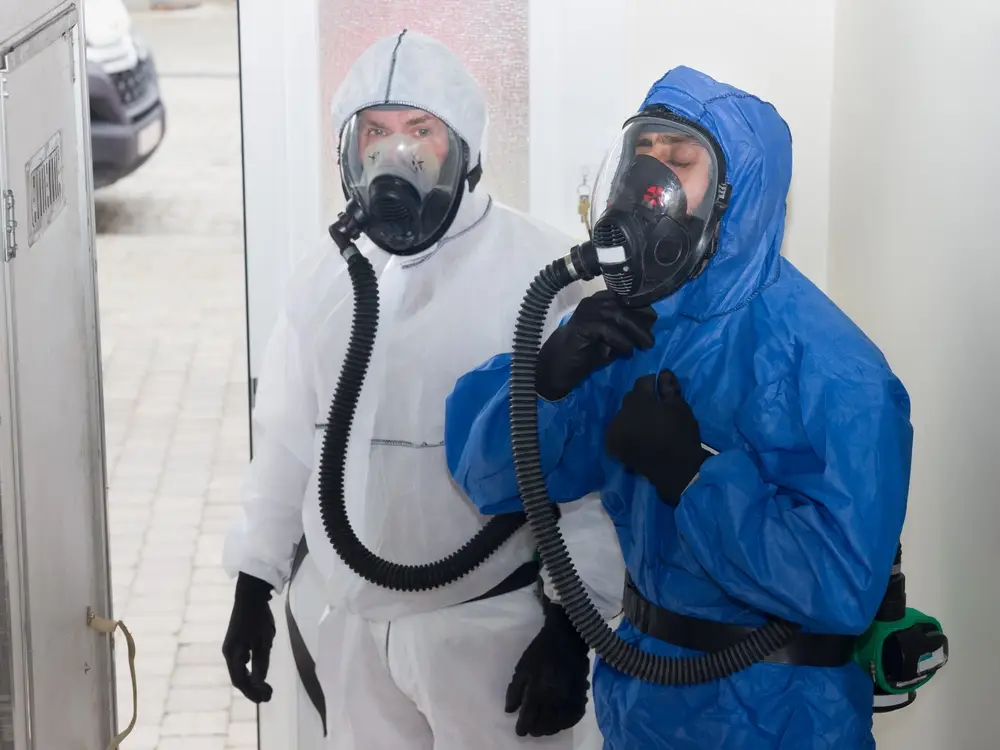
When homeowners learn that asbestos has to be removed from their home, the first question is usually "can’t I just take it out carefully myself?" The honest answer is no, and understanding what a professional abatement actually involves explains why. It is a controlled, engineered process designed to remove hazardous material without releasing a single fibre into the rest of your home. At Envirotech, this is precise, methodical work. Here is what really happens inside a proper abatement.
Step One: Testing and a Plan
Nothing begins until the material is confirmed to contain asbestos through laboratory testing, and a work plan is built around what and where it is. The plan defines the containment area, the removal method, and the clearance process. Skipping straight to removal is exactly how contamination spreads, which is why professional asbestos abatement is always built on testing first.
Step Two: Sealing Off the Work Area
The heart of safe abatement is containment. The work area is sealed off from the rest of the home with heavy polyethylene sheeting over walls, floors, doorways, and vents. The goal is a closed zone that any released fibres cannot escape. HVAC systems serving the area are shut down and sealed so they cannot carry fibres through the ductwork to other rooms.
This is the step DIY removal skips entirely, and it is the single biggest reason amateur removal is dangerous. Without containment, disturbing asbestos scatters fibres throughout the living space.
Step Three: Negative Air Pressure
Here is the piece most people have never heard of. Inside the sealed containment, professionals run a negative air machine, a powerful unit fitted with a HEPA filter that continuously draws air out of the work area and filters it. This does two things: it captures airborne fibres in the HEPA filter, and it keeps the containment at slightly lower pressure than the surrounding home.
That pressure difference matters enormously. Because the sealed area is at negative pressure, air flows into it rather than out of it. Even if there were a small gap in the containment, fibres would be pulled inward and captured, not pushed out into your home. It is an elegant, invisible safeguard.
| Control | What it accomplishes |
|---|---|
| Sealed containment | Physically isolates the work area |
| Negative air machine | Filters air and holds negative pressure |
| HEPA filtration | Captures microscopic fibres |
| Personal protective equipment | Protects the workers |
| Sealed disposal | Removes waste without release |
Step Four: Removal, Cleaning, and Disposal
Within the controlled zone, technicians in protective equipment remove the asbestos material using wet methods that keep fibres from becoming airborne, then bag and seal the waste for regulated disposal, not the regular trash. The area is HEPA-vacuumed and wiped down thoroughly. Every stage is designed to leave nothing behind.
Step Five: Air Clearance
Finally, independent air clearance testing confirms the air in the area is safe before the containment comes down and anyone moves back in. This verification is what turns "we removed it" into "it is proven safe." Whether the work is in the city or in communities like asbestos abatement in Airdrie, the process and the standard are the same.
Frequently Asked Questions
Why can’t I remove asbestos myself?
Because safe removal requires sealed containment, negative air pressure, HEPA filtration, wet removal methods, and regulated disposal. Without these, disturbing asbestos releases fibres throughout your home. The controls, not just the removal, are what keep it safe.
What is a negative air machine?
A HEPA-filtered unit that continuously draws air out of the sealed work area. It captures airborne fibres and keeps the containment at lower pressure than the rest of the home, so air, and any fibres, flow inward and are captured rather than escaping.
How is asbestos waste disposed of?
It is wetted, bagged, and sealed for regulated disposal at an approved facility, never placed in regular household garbage. Proper disposal is part of the controlled process.
How do I know it’s safe to move back in?
Independent air clearance testing confirms the air is safe before the containment is removed. That verification is what proves the area is clean, not just visually but by measured air quality.
Abatement Done the Right Way
Safe asbestos removal is an engineered process, and every step exists for a reason. Envirotech performs professional, fully contained asbestos abatement across Calgary and surrounding communities.
Call Envirotech at (403) 608-2747, or visit 5545 1A Street SW, Calgary. We serve Calgary and area, Monday to Saturday.

