
When a child is struggling with worry, big emotions, or a hard life change, parents understandably want to help them feel better. But the idea of "therapy" can raise a practical question: should a young child sit and talk about their feelings, or is there a better way for them to open up? This is where the difference between play therapy and talk therapy matters. At Rocky Mountain Psychological Services, Calgary families often ask which approach is right, and the honest answer is that it depends on the child.
This article is general information, not clinical advice. A qualified professional can help you choose the approach that best fits your child’s age and needs.
Why Children Do Not Always Respond to Talk Therapy
Adults often process difficulty by talking it through. Children, especially younger ones, are still developing the language and self-awareness to do that. Asking a distressed six-year-old to explain why they feel anxious can leave both the child and the therapist stuck. Children tend to show their inner world through behaviour, imagination, and play rather than through careful explanation.
That does not mean younger children cannot benefit from therapy. It means the approach has to match how they naturally communicate.
What Play Therapy Is
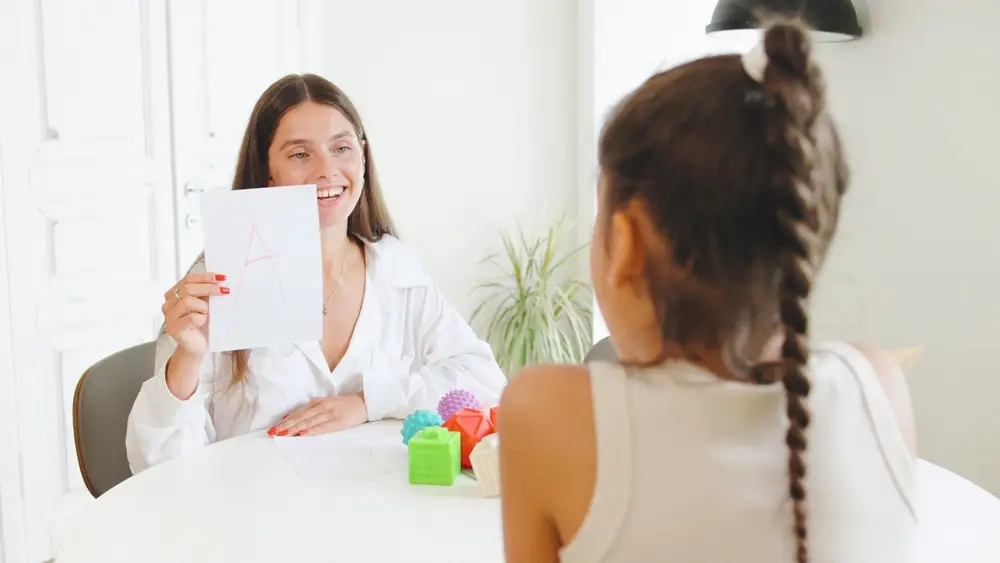
Play therapy is a developmentally based approach in which a child uses toys, art, and imaginative play to express concerns and work through problems. As the idea is often described, toys are like a child’s words, and play is a child’s language. In a warm, child-friendly room, a trained therapist observes the patterns in a child’s play to understand feelings the child may not be able to put into words.
Who It Tends to Suit
Play therapy is often well suited to children roughly ages 3 to 12 who are dealing with worry or fear, tantrums or emotional outbursts, family changes, low confidence, difficult experiences, or trouble with friendships. Through pretend play, drawing, and storytelling, children can safely explore big feelings and build coping skills, while parents stay involved through regular meetings and check-ins.
What Talk Therapy Is
Talk therapy, sometimes called counselling, uses conversation to help a person understand feelings, change unhelpful thinking patterns, and build coping strategies. Approaches such as cognitive behavioural strategies fall into this category. It works well when a child or teen has the verbal ability and self-reflection to engage in dialogue.
Who It Tends to Suit
Older children and teens often do well with talk-based approaches, especially around anxiety, low mood, stress, and self-esteem. Many therapists blend conversation with expressive methods like art or sandtray work so that opening up feels less pressured.
It Is Not Always Either-Or
In practice, the line between the two is not rigid. Good therapy is tailored to the child. A skilled clinician might use more play with a young child and shift toward conversation as the child grows, or combine both within a single approach. Child counselling often uses play and expressive arts when words are hard, alongside more direct problem-solving when that suits the child and the issue. The method follows the child, not the other way around.
How Age Guides the Choice
As a general guide, younger children usually benefit from play-based approaches, school-age children may do well with a blend, and teens often lean toward conversation, though individual temperament matters as much as age. A quiet, imaginative ten-year-old and a chatty, reflective eight-year-old might be matched quite differently.
How to Choose for Your Child
Rather than deciding on your own, it often helps to start with a conversation with a professional. A therapist can consider your child’s age, verbal ability, temperament, and the concerns you are seeing, then recommend an approach and adjust as therapy unfolds. The best sign of a good fit is usually a child who gradually feels more understood, more regulated, and more in control of their daily life.
At Rocky Mountain Psychological Services, the aim is to meet each child where they are, using the approach that helps them feel safe enough to grow.
Frequently Asked Questions
Is play therapy just playing, or is it real therapy?
It is real, purposeful therapy. A trained therapist uses play intentionally to help a child express and work through feelings they cannot yet put into words, while observing patterns and building coping skills.
At what age should a child switch from play therapy to talk therapy?
There is no fixed age. Younger children often benefit from play-based approaches, while older children and teens may do better with conversation. Many therapists blend both and adjust as a child matures, so the approach fits the individual.
Can the two approaches be combined?
Yes. Child counselling frequently blends play and expressive arts with more direct problem-solving, depending on the child and the concern. The approach is tailored rather than fixed.
How do I know which approach my child needs?
A qualified professional can help by considering your child’s age, communication style, temperament, and concerns. Therapy is also adjusted over time as the child responds, so the initial choice is a starting point, not a permanent label.
Choosing an approach to therapy does not have to be overwhelming. Consider speaking with a qualified professional who can guide the decision with you. Rocky Mountain Psychological Services is here to help Calgary families find the right fit for their child.

