
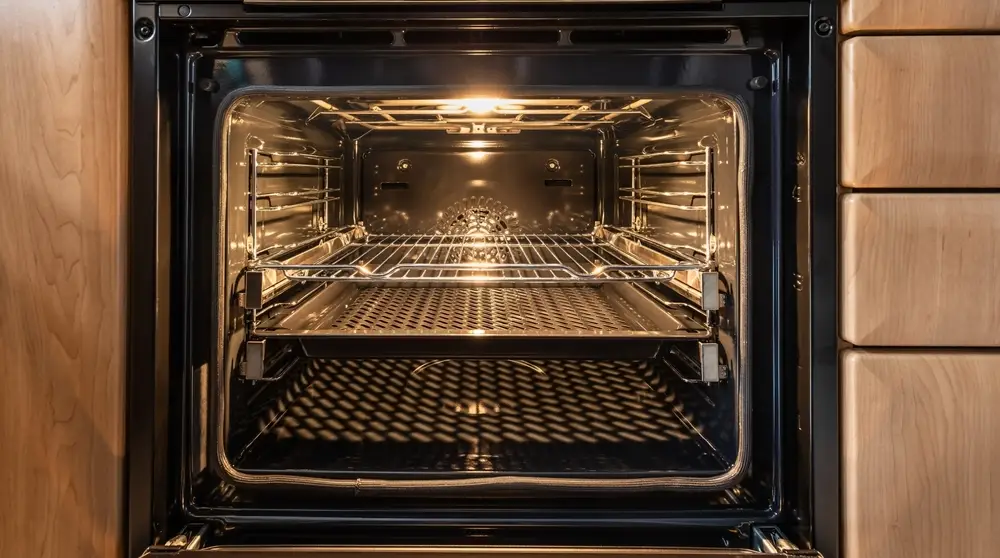
The self-clean cycle seems like a gift: press a button, walk away, and come back to a spotless oven. But that convenient feature has a hidden risk that catches many Calgary homeowners by surprise, usually at the worst possible time, right before a holiday meal. At Fast Appliance Repair, we get a predictable spike in oven calls after big cooking occasions, and the self-clean cycle is often the reason. Here is what every oven owner should understand before pressing that button.
How Self-Clean Actually Works
The self-clean cycle works by heating the oven to an extremely high temperature, far hotter than normal cooking, to incinerate food residue into ash you can wipe away. That intense heat is the whole mechanism, and it is also the source of the problem. Ovens are built to handle high heat, but the self-clean cycle pushes temperatures well beyond everyday cooking, and that extreme stress can take a toll on components.
Understanding this is the key to using the feature wisely, and to knowing why oven repair in Calgary calls cluster right after people run it.
The Hidden Risk
The extreme heat of a self-clean cycle can damage oven components. The most common casualty is the thermal fuse or the control board. Many ovens have a safety thermal fuse designed to cut power if temperatures get too high, and the self-clean cycle’s heat can trip or blow it, leaving the oven completely dead afterward. The intense heat can also stress the heating elements and the electronic control board.
The cruel irony is the timing. People often run self-clean right before hosting, to get a sparkling oven for the big meal. Then the cycle damages a component, and the oven will not turn on when it is time to cook. That is exactly the scenario we are called out for around holidays.
| Risk during self-clean | Result |
|---|---|
| Blown thermal fuse | Oven won’t turn on afterward |
| Stressed control board | Erratic operation or failure |
| Damaged heating element | Oven won’t heat properly |
| Locked door stuck | Door won’t release after the cycle |
How to Use Self-Clean More Safely
You do not have to avoid the feature entirely, but use it wisely. Do not run it right before you need the oven, run it well ahead of any important cooking, so if something fails you have time to address it. Remove the racks first if your manual recommends it, since the high heat can discolour them. Ensure good ventilation in the kitchen, as the cycle produces heat and odours. And consider that for lighter cleaning, a manual clean avoids the extreme-heat risk altogether.
Consider Manual Cleaning
For many homeowners, the safest approach is to skip the self-clean cycle for routine cleaning and instead wipe the oven down manually with appropriate cleaners. It takes more effort, but it avoids subjecting your oven’s components to the extreme heat that causes these failures. Save the self-clean cycle for occasional deep cleans, run well before you need the oven, if you use it at all. If a self-clean cycle has already left your oven dead, a technician can diagnose and replace the affected component, and the same team covers your cooktop and range service.
Frequently Asked Questions
Why did my oven stop working after a self-clean cycle?
The self-clean cycle reaches extreme temperatures that can blow the oven’s thermal fuse or stress the control board and heating elements. A blown fuse is a very common reason an oven is dead right after self-cleaning.
Is the self-clean cycle safe to use?
It can be used, but wisely. The extreme heat stresses components, so run it well ahead of any important cooking rather than right before, ensure good ventilation, and remove racks if your manual advises. For light cleaning, manual cleaning avoids the risk.
When is the worst time to run self-clean?
Right before a big meal or holiday cooking. If the cycle damages a component, the oven may not turn on when you need it. Always run it with time to spare in case something fails.
Should I just clean the oven manually instead?
For routine cleaning, many homeowners prefer manual cleaning to avoid the extreme-heat risk to components. Save self-clean for occasional deep cleans, well before you need the oven.
Cook With Confidence
Knowing the self-clean risk helps you avoid a dead oven at the worst moment. Fast Appliance Repair diagnoses and repairs ovens across all major brands.
Call Fast Appliance Repair at (587) 891-7771, serving Calgary, Okotoks, Airdrie, and surrounding areas.

