
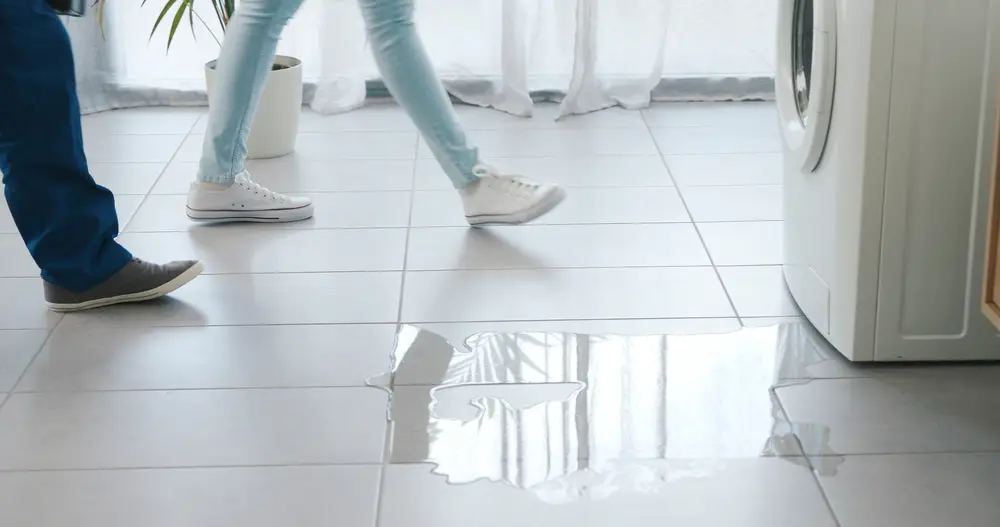
Finding a puddle on the laundry room floor is unsettling, especially when you cannot see where it came from. A washer leak is rarely a mystery once you know where to look, but the source is almost never where the water ends up. Water travels along the base of the machine and runs out at the lowest point, so a front leak can easily start at the back. At JAY Appliance Repair St. Albert, we trace washer leaks across St. Albert every week, and the cause usually falls into one of a handful of categories.
First, Figure Out When It Leaks
The single most useful clue is timing. Pay attention to whether the water appears while the machine fills, while it runs and tumbles, or only during the spin and drain. Each stage points to a different part of the machine, so noting when the puddle forms narrows the search dramatically.
- A leak only during fill points toward the inlet hoses or the water valve.
- A leak during wash and tumble points toward the door seal or the tub.
- A leak during drain and spin points toward the drain hose, the pump, or an internal hose.
Leaks That Appear During Filling
If water shows up early, before the drum is really moving, the supply side is the first place to check. The rubber inlet hoses at the back of the machine age, crack, and loosen at their connections. A worn washer at a hose fitting or a hairline crack in the hose itself can drip steadily during the fill. These connections are one of the most common leak points and are easy for a technician to inspect and reseal or replace.
Leaks During Wash on a Front-Load Machine
Front-load washers rely on a large rubber door boot, or bellows, to hold water inside the drum. Over time that seal collects coins, lint, and detergent residue, and it can tear or develop mould that keeps it from sealing. A torn or fouled door boot leaks right at the front of the machine during the wash cycle. A good habit is to wipe the seal dry after each load and check the folds for trapped objects.
Leaks During Drain and Spin
When the puddle only shows up as the machine empties and spins, the drain system is under suspicion. The drain pump, its housing, and the hoses that feed it are all working hard at this stage. A cracked drain hose, a loose clamp, or a pump with a worn seal will release water exactly when the drain cycle begins. The clear plastic filter housing on many front-loaders can also drip if it was not seated tightly after cleaning.
The Role of Detergent and Overloading
Not every leak is a broken part. Using too much detergent, or using a high-sudsing detergent in a high-efficiency machine, creates excess suds that can push water past seals that are otherwise fine. Overloading has a similar effect, forcing water and laundry against the door and seal. Before assuming the worst, switch to the correct high-efficiency detergent, measure carefully, and avoid cramming the drum. If the leak disappears, the machine was never broken.
When to Call a Technician
A small amount of water is tempting to ignore, but a steady leak is worth addressing quickly in a St. Albert home. Water that seeps under flooring or into a subfloor can cause damage that costs far more to repair than the washer fault itself, and a leak near electrical components is a safety concern. If you have ruled out detergent and overloading and the machine still leaks, it is time for washer repair in St. Albert from a technician who can pressure-test the hoses and inspect the pump and seals directly.
JAY Appliance Repair St. Albert starts by confirming when and where the leak appears, then works back to the component responsible rather than replacing parts on a guess. Any repair cost is provided as a quote after the machine has been assessed in person. If you are already seeing water on the floor with every load, the simplest next step is to book a service visit before the problem spreads.
Frequently Asked Questions
Why does my washer only leak during the spin cycle?
The drain system does its heavy work during spin and drain. A cracked drain hose, a loose clamp, or a worn pump seal commonly releases water at that exact stage, which is why the puddle appears only when the machine empties.
Can too much detergent really cause a leak?
Yes. Excess suds, or a non-high-efficiency detergent in an HE machine, can push water past seals that are in good condition. Measuring detergent correctly and avoiding overloading often stops a leak with no repair needed.
Where does the water go if the leak is at the back of the machine?
Water runs along the base and exits at the lowest point, which is often the front. That is why a puddle at the front of the washer can actually begin at an inlet hose or internal connection toward the rear.
Is a leaking washer safe to keep using?
A steady leak is best addressed promptly. Water can damage flooring and subfloor, and moisture near electrical parts is a safety risk. Ruling out detergent and overloading first is fine, but a persistent leak should be inspected.

